How do I apply front and back labels accurately?
Use positive container orientation, repeatable spacing and two applicators referenced to the same product datum, with guides and wipe-down matched to oval, rectangular or shaped containers.
What should I check first?
Record the machine state and the finished result before changing settings. This helps identify where control is first being lost.
- Verify label width, length, core, roll direction, gap, backing and maximum roll diameter.
- Run the smallest, largest and least stable container at normal production speed.
- Clean and align product and label sensors, then record their status during the fault.
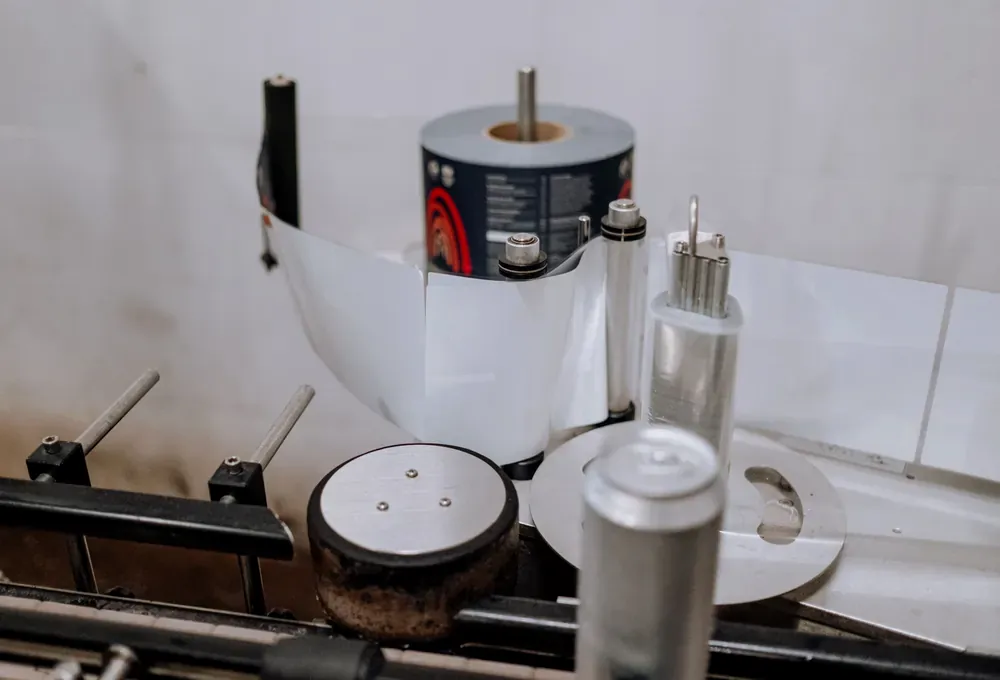
- Inspect unwind, web path, peel plate and rewinder for drag or lateral movement.
- For print-and-apply, reconcile scanner input, data response, printer status and pack tracking.
Why is this production problem happening?
Work from the evidence and change one variable at a time. These are the most relevant causes to investigate first.
- The container is not held to a repeatable datum.
- Label and adhesive are unsuitable for the surface, curvature or temperature.
- Web tension or tracking changes as the roll diameter falls.
- Sensor contrast, teach settings or physical position are incorrect.
- Variable data and physical pack tracking are not synchronised.
How can I correct or improve it?
Make a controlled change, repeat the same measurement and compare the result before moving to the next adjustment.
- Improve product spacing, orientation and side or top control.
- Prove label materials on production containers and environmental conditions.
- Set the applicator mechanically before fine timing adjustments.
- Add verification and reject logic for variable or regulated information.
- Create format recipes with controlled mechanical setup points.
What should I send Lancing?
The most reliable recommendation is based on representative production materials and a measurable acceptance result.
- Container drawings, photos and material
- Label specification, roll dimensions and roll direction
- Required label position and tolerance
- Line speed, spacing and conveyor height
- Variable-data source, code content and interface details
Which applications does this answer cover?
More quick answers about this problem
What should I check first for front back?+
Verify label width, length, core, roll direction, gap, backing and maximum roll diameter.
Why does this problem happen with front back?+
The container is not held to a repeatable datum.
How can I improve or correct the problem with front back?+
Improve product spacing, orientation and side or top control.
Which part of the production line does this question relate to?+
This question relates primarily to labelling & print-and-apply. It may also be affected by upstream product or pack supply and by downstream handling, so check the full production sequence rather than one machine in isolation.
What should I send when asking for a machinery recommendation?+
Send Container drawings, photos and material; Label specification, roll dimensions and roll direction; Required label position and tolerance; Line speed, spacing and conveyor height. Representative production samples and a measurable acceptance target are normally more useful than a catalogue description alone.
Explore the relevant Lancing machinery options
Review suitable equipment and application guidance, then request a recommendation based on your product, pack and required accepted output.
frontandbacklabelling.co.uk