How should conveyor guides be set for a chilled food pack?
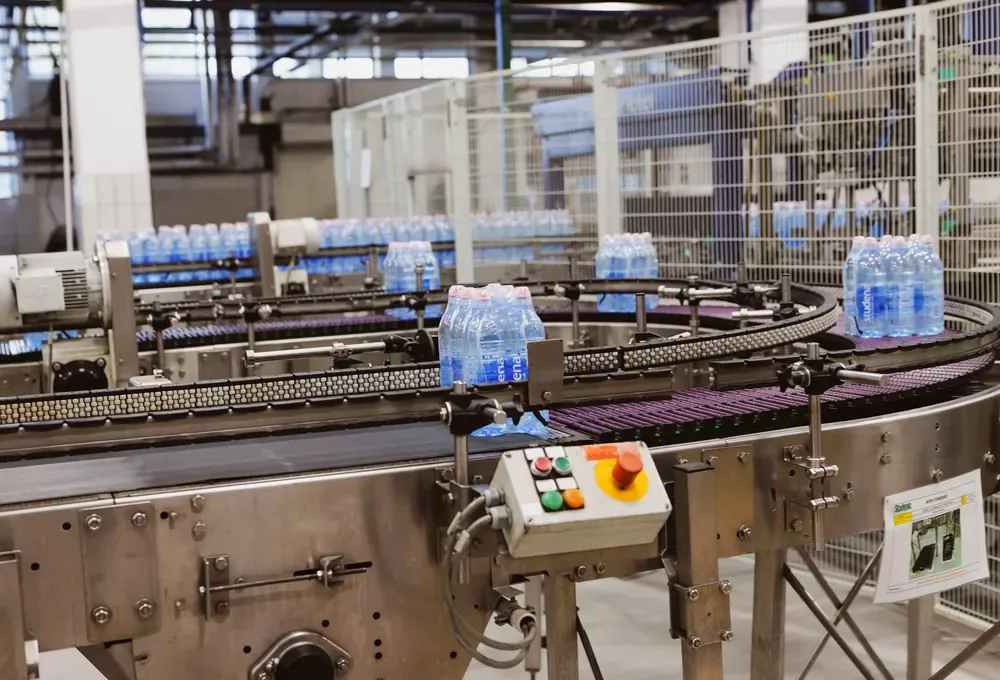
Guides should control without squeezing, scuffing or creating a pinch at transfers and curves. Use measured datum settings for each format and check the pack at both low and high line pressure.
What should I check first?
Record the machine state and the finished result before changing settings. This helps identify where control is first being lost.
- Run the chilled food pack through the full route and mark the first loss of control.
- Check condensation, low temperature and hygiene change belt and cleaning requirements.
- Measure heights, gaps, speeds, guide settings and queue pressure.
- Create a process map with cycle time, good output, stops and operators at each stage.
- Measure product dimensions, stability, weight and centre of gravity.
- Record normal accumulation, starvation, restart and changeover behaviour.
Why is this production problem happening?
Work from the evidence and change one variable at a time. These are the most relevant causes to investigate first.
- The support surface or transfer geometry is unsuitable for the load.
- Zone speeds and guide settings create uncontrolled pressure.
- The conveyor is compensating for an undefined upstream or downstream state.
- Equipment speeds were selected independently without a line balance.
- Transfers and accumulation do not protect product stability.
- Small recurring stops dominate output loss.
How can I correct or improve it?
Make a controlled change, repeat the same measurement and compare the result before moving to the next adjustment.
- Correct the first unstable transfer or contact point.
- Create format settings and controlled line states.
- Prove stops, queues, release and restart with real packs.
- Measure the current state before fixing the solution architecture.
- Design buffers around realistic stop duration and product behaviour.
- Automate the true constraint and its supporting tasks.
What should I send Lancing?
The most reliable recommendation is based on representative production materials and a measurable acceptance result.
- Representative chilled food pack samples
- Dimensioned pack drawing and mass
- Required orientation and rate
- Layout, heights and interface positions
- Video of the current handling problem
- Layout with elevations, available space and access
- Product and pack dimensions, weights and stability
Which applications does this answer cover?
More quick answers about this problem
What should I check first for chilled food pack?+
Run the chilled food pack through the full route and mark the first loss of control.
Why does this problem happen with chilled food pack?+
The support surface or transfer geometry is unsuitable for the load.
How can I improve or correct the problem with chilled food pack?+
Correct the first unstable transfer or contact point.
Which part of the production line does this question relate to?+
This question relates primarily to conveying, automation & complete lines. It may also be affected by upstream product or pack supply and by downstream handling, so check the full production sequence rather than one machine in isolation.
What should I send when asking for a machinery recommendation?+
Send Representative chilled food pack samples; Dimensioned pack drawing and mass; Required orientation and rate; Layout, heights and interface positions. Representative production samples and a measurable acceptance target are normally more useful than a catalogue description alone.
Explore the relevant Lancing machinery options
Review suitable equipment and application guidance, then request a recommendation based on your product, pack and required accepted output.
packagingconveyors.co.uk