Which coding technology is suitable for a glass bottle?
The starting route is continuous inkjet, laser or coded label, but selection must reflect that curvature, moisture and bottle movement affect print distance and focus. Prove code quality, adhesion, contrast, content, speed and verification with production materials.
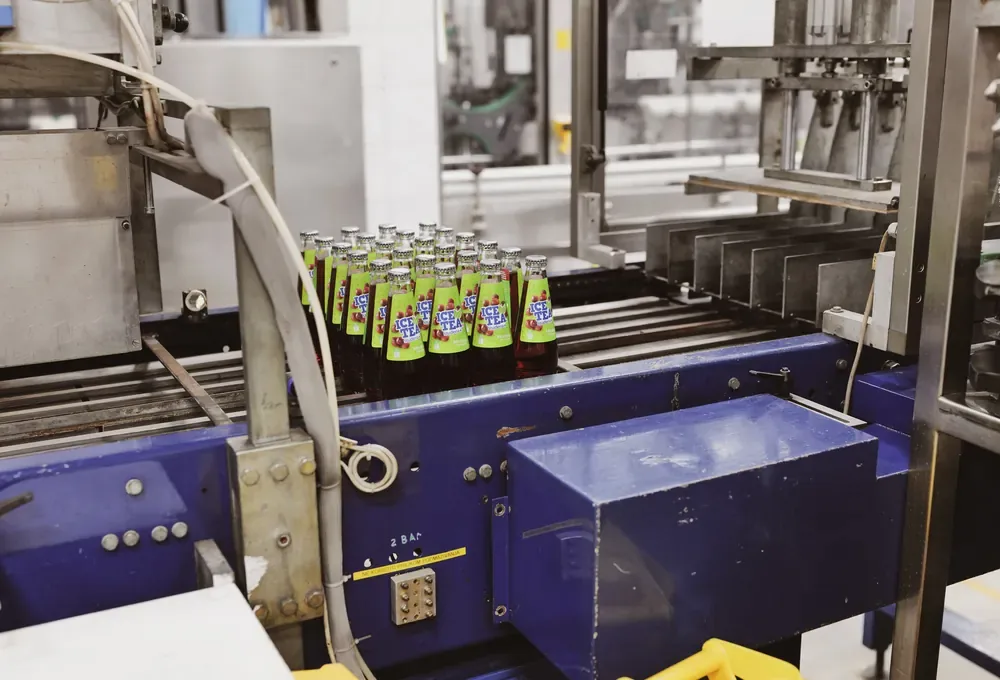
What should I check first?
Record the machine state and the finished result before changing settings. This helps identify where control is first being lost.
- Inspect the real glass bottle surface and its variation.
- Observe continuous inkjet, laser or coded label at minimum and maximum line speed.
- Record trigger, print, inspection and reject events in sequence.
- Identify every substrate, colour, surface finish and print position.
- Record minimum and maximum line speed and product-to-head distance.
- Inspect triggers, encoders and mounting rigidity during acceleration and stops.
Why is this production problem happening?
Work from the evidence and change one variable at a time. These are the most relevant causes to investigate first.
- The marking technology or consumable is incompatible with the surface.
- Pack position or trigger timing is unstable.
- Data control and physical product tracking are not linked.
- The technology or consumable is unsuitable for the substrate.
- The printhead distance or product movement is inconsistent.
- Trigger and encoder signals do not represent true pack position.
How can I correct or improve it?
Make a controlled change, repeat the same measurement and compare the result before moving to the next adjustment.
- Run adhesion and readability tests after normal handling.
- Stabilise product presentation and sensor timing.
- Implement controlled job selection and verification.
- Print production samples and test durability using an agreed method.
- Rigidly control product position and printhead geometry.
- Use encoder-based control where conveyor speed varies.
What should I send Lancing?
The most reliable recommendation is based on representative production materials and a measurable acceptance result.
- Representative glass bottle samples
- Exact code content, dimensions and grade
- Minimum and maximum line speed
- Required verification and rejection level
- Environmental and washdown conditions
- Substrate and representative printed samples
- Required code, barcode and character dimensions
Which applications does this answer cover?
More quick answers about this problem
What should I check first for glass bottle?+
Inspect the real glass bottle surface and its variation.
Why does this problem happen with glass bottle?+
The marking technology or consumable is incompatible with the surface.
How can I improve or correct the problem with glass bottle?+
Run adhesion and readability tests after normal handling.
Which part of the production line does this question relate to?+
This question relates primarily to coding & traceability. It may also be affected by upstream product or pack supply and by downstream handling, so check the full production sequence rather than one machine in isolation.
What should I send when asking for a machinery recommendation?+
Send Representative glass bottle samples; Exact code content, dimensions and grade; Minimum and maximum line speed; Required verification and rejection level. Representative production samples and a measurable acceptance target are normally more useful than a catalogue description alone.
Explore the relevant Lancing machinery options
Review suitable equipment and application guidance, then request a recommendation based on your product, pack and required accepted output.
inkjetcoder.co.uk