How do I wash returned bottles and remove old labels?
Define pre-sort, soak or spray, label removal, internal and external washing, rinsing, drying and inspection around actual bottle condition and adhesive type.
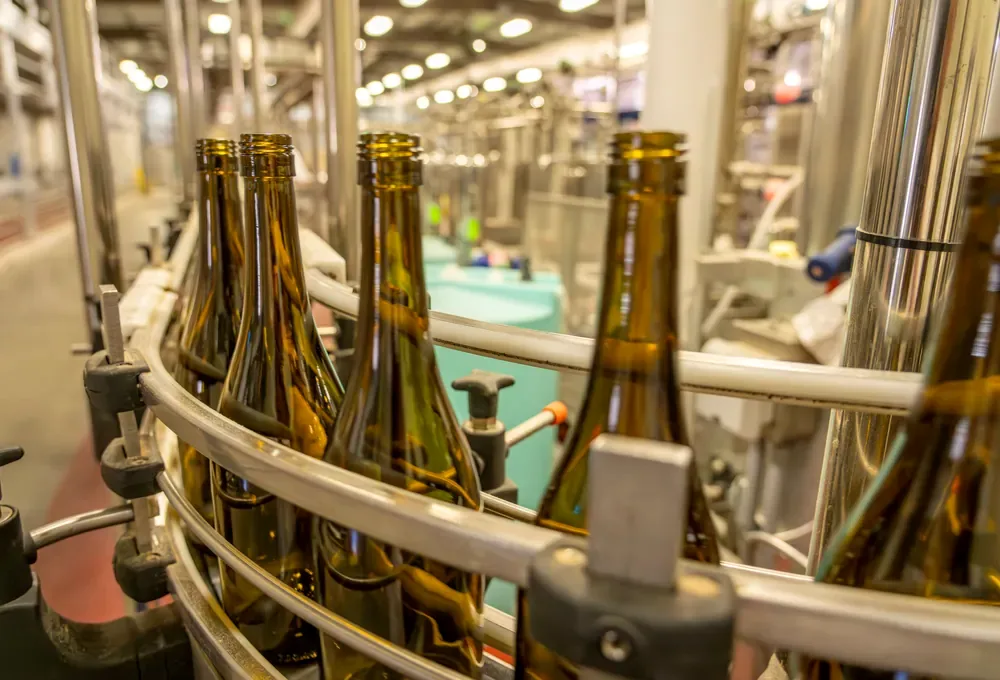
What should I check first?
Record the machine state and the finished result before changing settings. This helps identify where control is first being lost.
- Measure representative parts or bottles from several batches.
- Record the true required feed rate plus restart and surge conditions.
- Observe the first point at which orientation or stability is lost.
- Check contact surfaces for wear, contamination, static and damage.
- Confirm acceptable scuffing, cleanliness and orientation criteria.
Why is this production problem happening?
Work from the evidence and change one variable at a time. These are the most relevant causes to investigate first.
- The item geometry does not provide a reliable orientation feature.
- Bulk loading creates nesting, tangling or excessive pressure.
- Transfers and guides do not maintain a stable datum.
- Feed rate is not buffered against downstream stops.
- Cleaning chemistry, time or mechanical action is mismatched to the contamination.
How can I correct or improve it?
Make a controlled change, repeat the same measurement and compare the result before moving to the next adjustment.
- Prove feedability using production parts from normal tolerances.
- Control bulk load and provide accumulation without damaging product.
- Improve transfers, guides and positive orientation checks.
- Add reject or recirculation rather than passing uncertain items.
- For washing, validate cleanliness, rinse and drying as separate stages.
What should I send Lancing?
The most reliable recommendation is based on representative production materials and a measurable acceptance result.
- Representative containers or components from several batches
- Drawings, material, weight and orientation requirement
- Required sustained and peak feed rate
- Allowed cosmetic contact or cleanliness standard
- Upstream supply and downstream machine interface
Which applications does this answer cover?
More quick answers about this problem
What should I check first for bottle washing?+
Measure representative parts or bottles from several batches.
Why does this problem happen with bottle washing?+
The item geometry does not provide a reliable orientation feature.
How can I improve or correct the problem with bottle washing?+
Prove feedability using production parts from normal tolerances.
Which part of the production line does this question relate to?+
This question relates primarily to bottle preparation & component feeding. It may also be affected by upstream product or pack supply and by downstream handling, so check the full production sequence rather than one machine in isolation.
What should I send when asking for a machinery recommendation?+
Send Representative containers or components from several batches; Drawings, material, weight and orientation requirement; Required sustained and peak feed rate; Allowed cosmetic contact or cleanliness standard. Representative production samples and a measurable acceptance target are normally more useful than a catalogue description alone.
Explore the relevant Lancing machinery options
Review suitable equipment and application guidance, then request a recommendation based on your product, pack and required accepted output.
bottlewashing.co.uk